
As a concrete contractor with many years of experience in both residential and commercial projects, I have seen my fair share of mistakes made during concrete driveway installation. These errors often lead to costly repairs and reduced longevity of the concrete driveway.
The primary issues I encounter with concrete driveways are improper base preparation, insufficient concrete thickness, and inadequate reinforcement. In this article, I will delve deeper into these pitfalls and share insights on how to avoid them. Additionally, I will provide an overview of creating exposed aggregate concrete, a popular finish for concrete driveways.
1. Improper Base Preparation
The base of your concrete driveway is its foundation, and its preparation is crucial for ensuring the concrete driveway’s stability and longevity. Proper preparation is key to preventing future issues such as cracking, shifting, or poor drainage. Here are some detailed aspects to consider during concrete driveway installation:
Compaction:
The soil beneath the base of the concrete driveway must be compacted thoroughly to create a stable and supportive foundation. A well-compacted base prevents the concrete driveway from settling unevenly, which can lead to cracks and structural weaknesses over time. During concrete driveway installation, we use professional-grade compactor machines to achieve optimal compaction. This process eliminates air pockets and ensures a firm, even surface that can withstand heavy loads and environmental conditions.
Grading:
Proper grading is essential for effective drainage when undertaking concrete driveway installation. Without adequate grading, water can pool on the surface, leading to erosion and a weakened concrete structure. During installation, we carefully shape the base to create a slight slope that directs water runoff away from the concrete driveway, reducing the risk of water damage. Proper grading ensures long-term durability and helps maintain the integrity of the concrete surface, preventing issues such as puddling and frost damage.
Soil Type Considerations:
Different soil types have unique characteristics that affect concrete driveway installation. For instance, clay soil retains moisture and can become unstable when wet, increasing the risk of shifting and cracking. To counteract this, additional stabilisation techniques such as adding sand or gravel may be required. Conversely, sandy soils drain quickly but require thorough compaction to prevent movement beneath the driveway. Understanding soil composition is essential for a successful concrete driveway installation, ensuring that the base is prepared correctly to provide long-lasting support and stability.
By carefully addressing these factors, we ensure that your concrete driveway installation results in a strong, durable, and well-functioning driveway that stands the test of time.
2. Insufficient Concrete Thickness
The thickness of your concrete driveway plays a vital role in its durability and ability to withstand various loads, particularly for concrete driveways in high-traffic areas. Ensuring the correct thickness during concrete driveway installation is essential for long-term performance and structural integrity. Here are some key factors to consider when planning your concrete driveway:
Load Bearing Capacity:
The required thickness for concrete driveway installation depends on the expected load it will bear. A driveway used by passenger cars and light vehicles typically requires a minimum thickness of 100mm. However, if your concrete driveway will be subjected to heavier loads, such as trucks, caravans, or commercial vehicles, increasing the thickness to at least 150mm is highly recommended. Reinforcing the concrete with steel mesh or rebar further enhances its strength, preventing premature cracking and ensuring longevity.
Location Factors:
The geographical location and terrain of the driveway also influence the required thickness during concrete driveway installation. If your property is on a slope or features uneven ground, the concrete driveway must be designed to resist shifting, sliding, or erosion over time. Additional thickness and reinforcement may be necessary to maintain stability in such conditions. Proper site preparation, including soil compaction and the use of a suitable sub-base, ensures a solid foundation that enhances the performance and lifespan of your concrete driveway.
3. Inadequate Reinforcement
Reinforcement is critical for enhancing the strength and durability of concrete driveways. Proper reinforcement prevents cracking and extends the lifespan of concrete driveways, ensuring they remain structurally sound over time. When planning a concrete driveway installation, it is essential to consider the following aspects:
Placement:
Reinforcement should be carefully positioned in the middle of the slab during concrete driveway installation to effectively counteract tensile stresses. Proper placement ensures even load distribution and reduces the likelihood of structural weaknesses. If reinforcement is misplaced or too close to the surface, the concrete driveway may lack sufficient support, making it more prone to cracking and premature deterioration.
Spacing:
Correct spacing of reinforcement is crucial in concrete driveway installation, whether using steel rebar or mesh. For residential concrete driveway installation, steel rebar should typically be spaced at intervals of approximately 300mm to provide adequate support. In commercial concrete driveway installation, where driveways must accommodate heavier loads and higher traffic volumes, rebar spacing may need to be closer to enhance strength and load bearing capacity. Proper spacing ensures that the reinforcement effectively distributes stress across the entire driveway surface, minimising the risk of cracks and structural failure.
Type of Reinforcement:
Different types of reinforcement materials can be used in concrete driveway installation, each offering distinct benefits. Steel rebar is a popular choice due to its exceptional strength and durability, making it ideal for heavy duty driveways. Alternatively, fibre mesh reinforcement is gaining popularity in concrete driveway installation because it is easier to work with and provides uniform reinforcement throughout the slab. Fibre mesh helps control shrinkage cracks and enhances the overall longevity of the concrete driveway, making it a practical and efficient reinforcement solution.
By carefully considering reinforcement placement, spacing, and material selection, a well structured concrete driveway installation can be achieved, ensuring a long lasting, resilient, and durable surface.
5 Reasons to Choose Our Concrete Services
- Expertise and Experience: With years of experience in concrete work, we bring unmatched expertise to every project.
- Quality Materials: We use only the highest quality materials to ensure durability and longevity.
- Attention to Detail: From proper base preparation to precise reinforcement placement, we pay meticulous attention to every detail.
- Custom Solutions: We offer tailored solutions to meet your specific needs, whether residential or commercial.
- Customer Satisfaction: Our commitment to excellence ensures customer satisfaction, backed by numerous positive testimonials.
Contact our team of concreting professionals today for more details or to request a free concrete driveway installation quote. Let us help you achieve the perfect concrete driveway for your home or business.
Frequently Asked Questions (FAQs)
Proper base preparation is crucial for a concrete driveway because it ensures durability, stability, and longevity. A well prepared base provides a solid foundation that prevents cracking and sinking over time, especially under the weight of vehicles. It also helps with proper drainage, reducing the risk of water pooling, which can weaken the concrete. By investing in thorough base preparation, you’re setting up your driveway to withstand wear and tear, saving money on future repairs. It’s a small step that makes a big difference in the overall quality and performance of your driveway.
The thickness of a concrete driveway is important to ensure it can handle the load it’s designed for. For most residential driveways in Australia, a thickness of 100mm (10cm) is generally recommended. If the driveway will be supporting heavier vehicles, like trucks or caravans, it’s a good idea to increase the thickness to 125-150mm. Ensuring the correct thickness not only improves durability but also reduces the risk of cracks and damage over time. By getting this right from the start, you’ll have a driveway that’s strong, reliable, and built to last.
Reinforcement is essential in concrete driveways as it strengthens the structure and prevents cracking caused by shifting soil, heavy loads, or temperature changes. Steel reinforcement, such as mesh or rebar, helps distribute weight evenly across the slab, ensuring your driveway can handle the stress of daily use without deteriorating. It also increases the driveway’s lifespan by making it more resistant to wear and tear. While it may seem like an added cost upfront, reinforcement is a smart investment that protects your driveway from costly repairs in the future. It’s all about creating a durable and long-lasting surface you can rely on.
The most common types of reinforcement used in concrete driveways are steel mesh and rebar (reinforcing bar). Steel mesh is ideal for distributing loads evenly across the surface, helping to prevent cracks caused by shifting soil or heavy vehicles. Rebar, on the other hand, provides extra strength, especially in driveways exposed to greater stress, such as those supporting trucks or caravans. Some projects may also use fibres mixed into the concrete for added durability and crack resistance. Choosing the right type of reinforcement ensures your driveway is strong, reliable, and built to handle the demands of daily use, offering peace of mind for years to come.
Climate plays a significant role in determining the thickness of a concrete driveway because it influences how the concrete will perform over time. In areas with extreme temperature fluctuations, such as hot summers and cool winters, the driveway may expand and contract, increasing the risk of cracking. To combat this, a slightly thicker slab, along with proper reinforcement, can provide added durability and resistance to these stresses. Additionally, regions with heavy rainfall or poor drainage may require a thicker driveway to prevent water damage and support the stability of the base. By tailoring the thickness of your driveway to the local climate, you ensure it remains strong, functional, and long-lasting, no matter the weather.
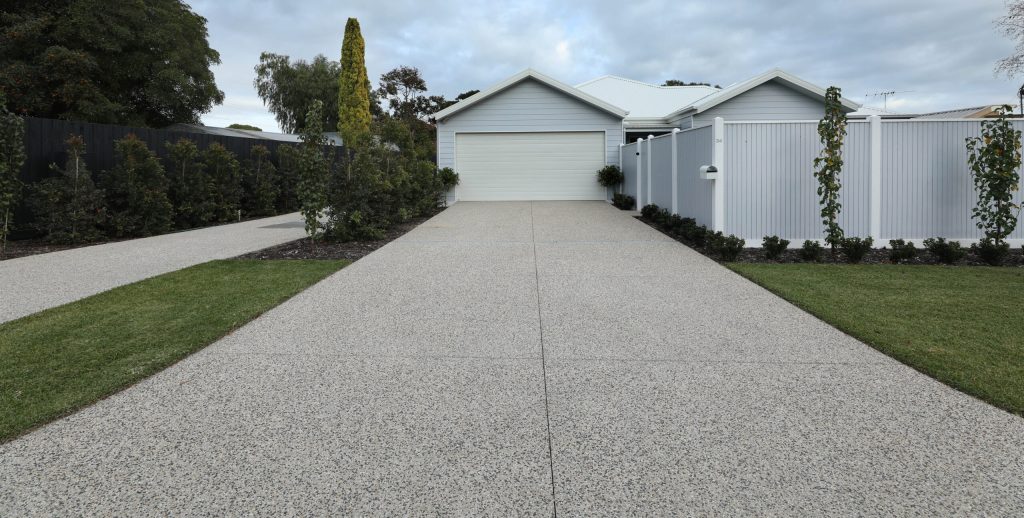
Exposed aggregate concrete offers a stylish and durable finish that enhances the appearance of any outdoor space. Its unique texture and variety of colours make it a popular choice for driveways, pathways, and patios, adding character and charm to your home. Beyond aesthetics, it’s also incredibly tough and slip-resistant, making it perfect for areas that need to handle heavy traffic or wet conditions. This type of concrete requires minimal maintenance, staying attractive and functional for years with just occasional cleaning and resealing. With its blend of beauty, practicality, and longevity, exposed aggregate concrete is an excellent investment for any property.
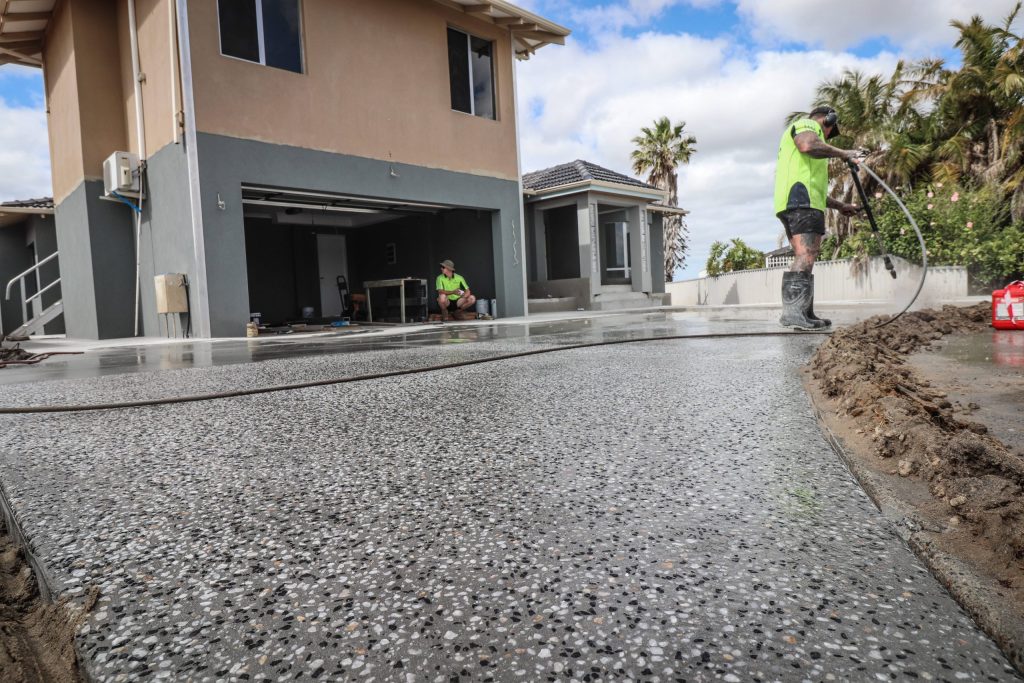
Exposed aggregate concrete is created by removing the top layer of cement paste to reveal the decorative stones or aggregates beneath. The process begins by mixing concrete with selected aggregates, such as pebbles, stones, or crushed quartz, which give the surface its unique look. Once poured and levelled, the surface is treated to delay the setting of the top layer, allowing the cement to be carefully washed away. This exposes the aggregates, creating a textured, eye-catching finish. The result is not only visually stunning but also durable and slip-resistant, making it a practical and stylish choice for outdoor areas like driveways and pathways.
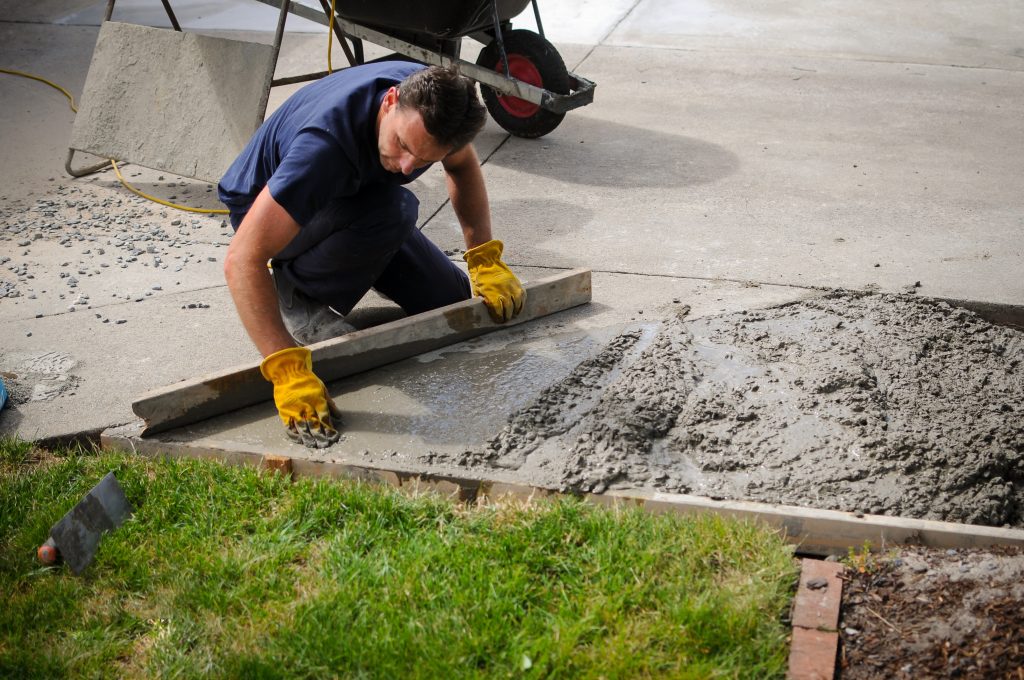
Installing a concrete driveway yourself is possible, but it’s a challenging task that requires proper planning, tools, and expertise. Pouring concrete is more than just mixing and laying—it involves preparing the base, ensuring the correct thickness, adding reinforcement, and achieving a smooth, durable finish. Mistakes during installation, such as uneven surfaces or improper drainage, can lead to costly repairs down the track. Hiring professionals ensures the job is done efficiently, with the right techniques and materials, saving you time and stress. While DIY might seem like a money-saving option, the quality and longevity of a professionally installed driveway make it a worthwhile investment.
Ensuring proper drainage for your concrete driveway is essential to prevent water pooling and maintain its durability over time. The key is to design the driveway with a slight slope, typically a gradient of 1-2%, directing water away from your home and towards suitable drainage points. Incorporating features like drainage channels or grates along the edges can also help manage heavy rainfall. Proper compaction of the base layer is equally important, as it prevents water from seeping underneath and weakening the concrete. By focusing on good drainage design, you’ll protect your driveway from damage and create a safer, longer-lasting surface for everyday use.
Choosing our concrete services means investing in quality, reliability, and expertise. We pride ourselves on delivering exceptional workmanship, using premium materials and the latest techniques to ensure your concrete projects stand the test of time. Whether it’s a driveway, pathway, or decorative finish, we tailor every job to your specific needs, guaranteeing a result that’s both functional and visually stunning. Our team is committed to providing friendly, professional service, keeping you informed and involved every step of the way. With us, you’re not just getting a concrete solution—you’re getting peace of mind and a product you can be proud of for years to come.
